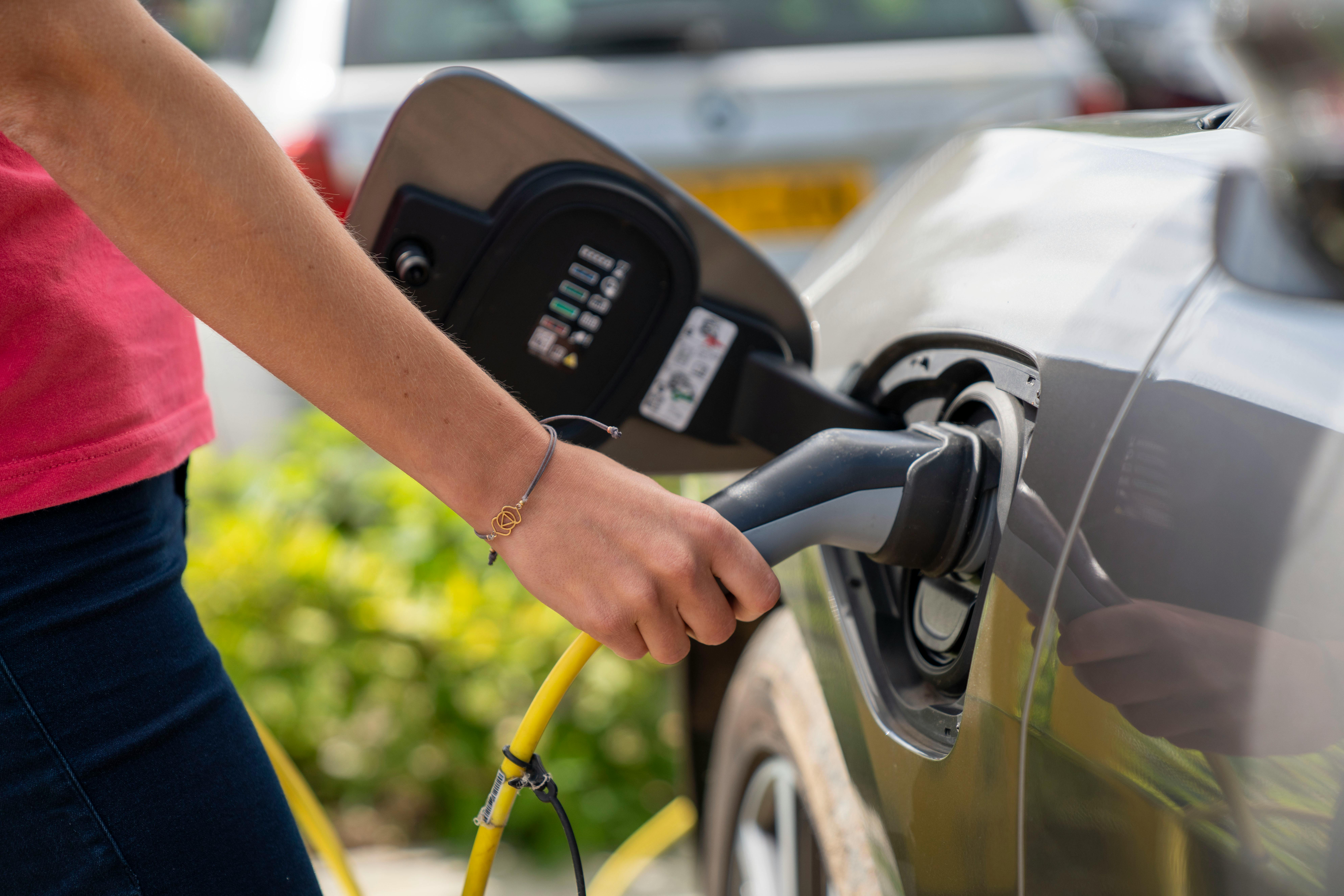

A slower pace, but British Columbia is still moving forward on electric vehicle sales targets.
Electric‑vehicle (EV) sales targets are one of the most effective tools governments use to cut transportation emissions. They require automakers to supply more zero‑emission vehicles, which helps reduce pollution, lower fuel costs for households, and speed up the shift to cleaner transportation.
Many of our grantee partners in B.C. have advocated long and hard for what became leading policy in Canada and much of North America. B.C. was the first province to introduce a zero‑emission vehicle mandate and has consistently had the highest EV adoption rates in Canada. That’s why the province’s recent decision to weaken its EV sales targets has drawn attention — but many organizations note that while the targets were softened, the core policy remains in place.
Clean Energy Canada: A Step Back, But Not a Reversal
Clean Energy Canada acknowledges that the province rolled back its commitment, but emphasizes that B.C. still chose to maintain a stronger path than the federal baseline. They highlight several important points:
- B.C. is continuing to chart its own course, keeping rules that help ensure British Columbians can access the EVs they want.
- Demand for EVs remains high, and maintaining provincial requirements helps ensure automakers continue supplying affordable, cost‑saving models to the province.
- EVs offer significant household savings, and Clean Energy Canada notes that keeping the mandate—though softened—helps protect those benefits.
- With strong charging infrastructure and clean electricity already in place, B.C. still has the foundation to support widespread EV adoption.
Their overall message: the province slowed its pace, but it did not abandon its long‑term direction.
David Suzuki Foundation: A Disappointment, But Not a Collapse
The David Suzuki Foundation describes the weaker targets as a setback for climate action, given transportation’s major role in emissions. However, they also note that B.C. resisted pressure to fully dismantle its EV policy. The core framework remains, allowing continued progress even if it is more gradual.
Pembina Institute: Risks Ahead, Yet Momentum Remains
The Pembina Institute warns that weakening EV targets could affect jobs, investment and consumer savings. Still, they point out that B.C. kept its EV mandate in place. By doing so, the province preserves:
- Predictability for businesses planning around EV supply.
- Continued investment in charging infrastructure.
- Growth in clean‑transportation jobs and industry activity.
Pembina’s view is that while the change introduces risks, the province avoided the most damaging outcome.
Thanks to the advocacy work of our grantee partners, the government kept the essential structure needed to continue advancing EV adoption rather than ditching the policy altogether. With strong public demand and existing infrastructure, B.C. still has the tools to remain a leader in Canada’s transition to cleaner transportation.